
White Heart 🤍 Meaning: Purity, Peace, or Something More?
By The Cool Symbol Team on 2026-05-28
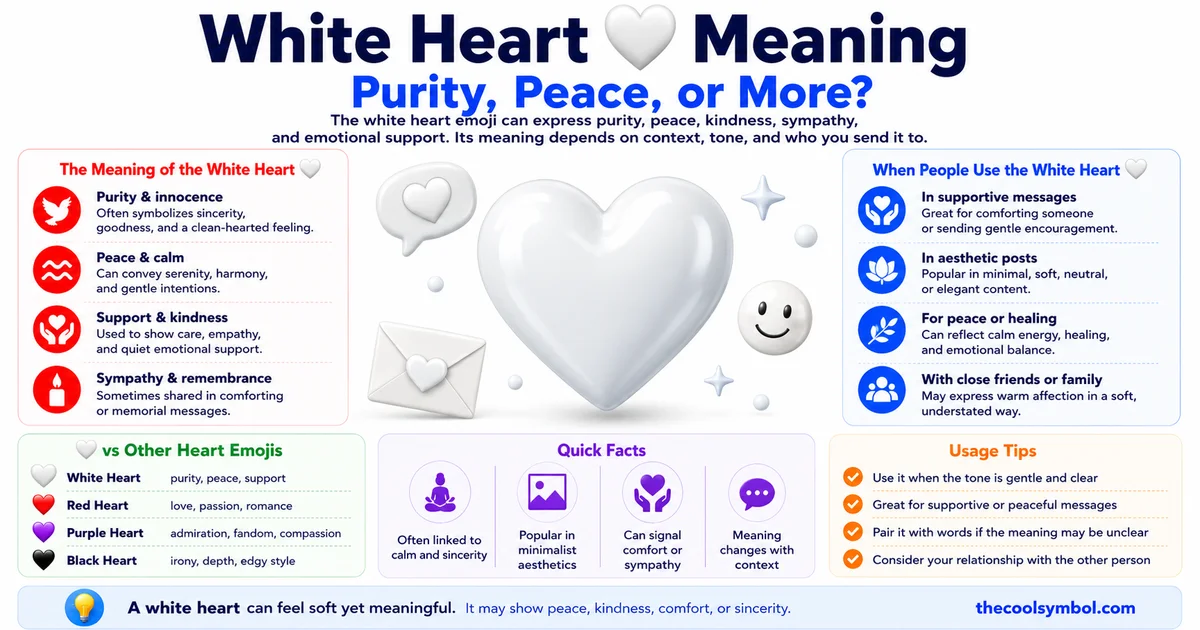
The white heart is the quietest emoji in the heart family.
It doesn’t shout like the red one. It doesn’t carry the moody weight of the black one. It doesn’t trigger fandom recognition like the purple one. It just sits there, soft and minimal, doing something different than every other color.
Which is exactly why it’s exploded in usage since Unicode added it in 2019. The white heart filled a gap nobody knew existed: a heart for moments that needed warmth without volume.
This guide breaks down what the white heart actually means, the cultural associations of the color white, the modern uses across social media and texting and the situations where the white heart says exactly the right thing.
The short answer: what the white heart means
The white heart carries four main meanings depending on context.
- Pure love and emotional clarity
- Peace, calm and serenity
- Mourning and condolences (in some cultures)
- Minimalist aesthetic and clean visual style
Unlike most heart colors that have one dominant meaning, the white heart sits in delicate balance. It can be the gentlest expression of love or the quietest form of grief. The context around it decides which version is in play.
Where the white heart emoji came from
The white heart is the second-newest heart color in Unicode. It was added in Unicode 12.0 in 2019, three years after the black heart and decades after the red one.
The delay matters. By the time the white heart arrived, every other heart color had already established its meaning. Red had romance. Pink had cute affection. Yellow had friendship. Black had moodiness. Purple had K-pop. The white heart had to find its own lane.
It did, mostly through the aesthetic-minded corners of Instagram, Tumblr and Pinterest. Minimalist accounts adopted the white heart almost immediately because it matched their clean, monochrome visual style. From there it spread into wedding content, mental health posts and modern romantic gestures that wanted something softer than the standard red heart.
By 2022, the white heart had carved out a permanent place in the emoji landscape as the heart of quiet, intentional emotion.
Why the color white shaped the emoji’s meaning
The white heart didn’t get its associations randomly. They come from centuries of cultural meaning attached to the color white itself.
Purity and new beginnings
Across most Western cultures, white symbolizes purity. White wedding dresses, white baptismal gowns, white doves at peace ceremonies. The color signals something clean, untouched, beginning fresh. That’s why the white heart often appears in wedding posts, engagement announcements and posts about new chapters.
Peace and calm
White flags signal surrender. White roses represent silence in Victorian flower language. White noise calms anxious minds. The cultural association with peace runs deep, which is why the white heart feels gentler than any other heart color.
Mourning in Eastern cultures
This is where the white heart gets complicated. In many East Asian countries (Japan, China, Korea, Vietnam), white is the traditional color of mourning. White clothes are worn to funerals. White flowers represent loss. A white heart in these contexts can read as condolences rather than love.
If you’re messaging someone from a culture that associates white with mourning, be aware that your soft, gentle white heart might land as a much heavier message than you intended.
Minimalism and design
In modern design culture, white is the color of restraint. Apple’s product photography is white-on-white. Scandinavian interiors use white as the dominant tone. Instagram aesthetics built around white walls and natural light have dominated the platform since 2017. The white heart became part of that visual vocabulary.
Visual: what the white heart means by context
The same emoji means very different things depending on where and how it shows up. Here’s how to read it.
Always read the context first. A white heart on an engagement post and a white heart on a memorial post share zero meaning despite being the same character.
How people actually use the white heart today
Beyond the symbolic meanings, the white heart has settled into a few specific everyday roles in 2026 texting and posting.
Wedding and engagement content
This is the white heart’s dominant use case. Brides post engagement photos with white hearts. Wedding planners use them in branding. Couples on anniversary posts reach for white because red feels too loud and pink feels too playful. The white heart became the unofficial wedding emoji.
Mental health and self-care
On posts about anxiety, healing, therapy and burnout, the white heart shows up as a gentle marker of solidarity. It says “I see you, I’m with you, no need to say more.” Mental health awareness accounts use it heavily because it doesn’t compete with the emotional weight of the post.
Soft romantic affection
Couples who want to express love without the intensity of the red heart use the white one. It works for everyday “goodnight” texts, casual affection, long-term-relationship moments where the explicit declaration isn’t needed but the warmth still is.
Aesthetic curation
Instagram bios with minimalist branding use the white heart as a stylistic flourish. It signals “I care about how my profile looks” without committing to a specific emotion. Often paired with other neutral elements: clean fonts, white-and-beige photo grids, soft beige tones.
Need to copy the white heart or any other heart variant? Browse the complete heart symbols and emoji collection here →. Every color, every shape, ready to copy and paste anywhere you type.
When to send the white heart
Good times to send it
- Engagement, wedding or anniversary celebrations
- Posts about new beginnings (new home, new baby, new job)
- Replying to a friend’s vulnerable mental health post
- Long-term romantic relationships where soft is the right tone
- Minimalist aesthetic accounts and clean visual content
- Quiet condolences when more emotional emojis feel too loud
Times to skip it
- New relationships where you want to clearly signal romantic interest (red is stronger)
- Excited celebrations that need energy (use 🎉 or sparkling hearts instead)
- Messages to East Asian recipients during regular conversations (the mourning association can confuse the read)
- Professional contexts where any heart feels out of place
White heart vs other heart colors
The white heart sits at one end of the heart spectrum, with all the louder colors at the other end.
The red heart represents direct, classic love. It’s the loudest, most universal heart emoji. Use it when you want zero ambiguity about romantic or affectionate intent.
The black heart works as the cool, ironic, sometimes mournful counterpart. It’s the moody cousin of the white one. Both are quiet, but emotionally opposite. White is soft and warm, black is sharp and detached.
The purple heart carries cultural weight from BTS fandom and the US military Purple Heart medal. It’s louder than white but quieter than red, and tied to specific communities in ways the white heart isn’t.
If you want soft warmth without specifying what kind, the white heart is usually the right pick. If you want something louder or more specific, almost any other color works better.
4 mistakes people make with the white heart
1. Using it in a brand-new romantic context
Sending a white heart to someone you’ve just started dating is too subtle. They might read it as friend-zoning, as you being noncommittal, or as just an aesthetic choice that means nothing. For new relationships, the red heart removes ambiguity. Save the white one for established couples.
2. Forgetting the cultural context
In Japan, Korea, China and Vietnam, white is traditionally associated with mourning. If you’re texting a friend or partner from these cultures during a normal conversation and you send a white heart, they might pause to wonder if something is wrong. Check the cultural background of your recipient before defaulting to white.
3. Treating it as interchangeable with the red heart
The white heart and red heart are not the same emoji in lighter colors. They mean fundamentally different things. The red one is direct love. The white one is quiet warmth or peace. Picking the wrong one changes your message significantly, even if both look like hearts to you.
4. Overusing it in aesthetic spam
Posting the white heart 15 times in a row on Instagram doesn’t make your bio look more aesthetic. It looks like you don’t know what to say. The white heart works best when used sparingly, in moments where its quiet weight has room to land.
Wrapping up
The white heart is the most context-dependent emoji in the heart family. The same character can mean a wedding, a funeral, a clean Instagram bio, or a quiet “I love you.” The meaning lives in what surrounds it, not in the emoji itself.
Use it for soft moments. Match it to relationships that don’t need loud expression. And remember that one quiet white heart, used in the right moment, can carry more weight than 10 red ones spammed out of habit.